How to Choose a Scrapbook Album: Sizes, Bindings, and Page Protectors
The album decides your page size, how pages are added and which protectors fit. Compare three-ring, post-bound and strap-hinge bindings and the common page sizes before buying paper.
Knowing how to choose a scrapbook album before buying paper saves a lot of rework, because the album fixes three things at once: the size of every page, how pages are added or moved, and what kind of page protector you can use. Change albums halfway through a project and the finished pages may not fit the new one.
Three decisions cover it. Pick the binding, then the page size, then the protector style. Covers and colors come last, since they change nothing about how the album works.
The three main bindings
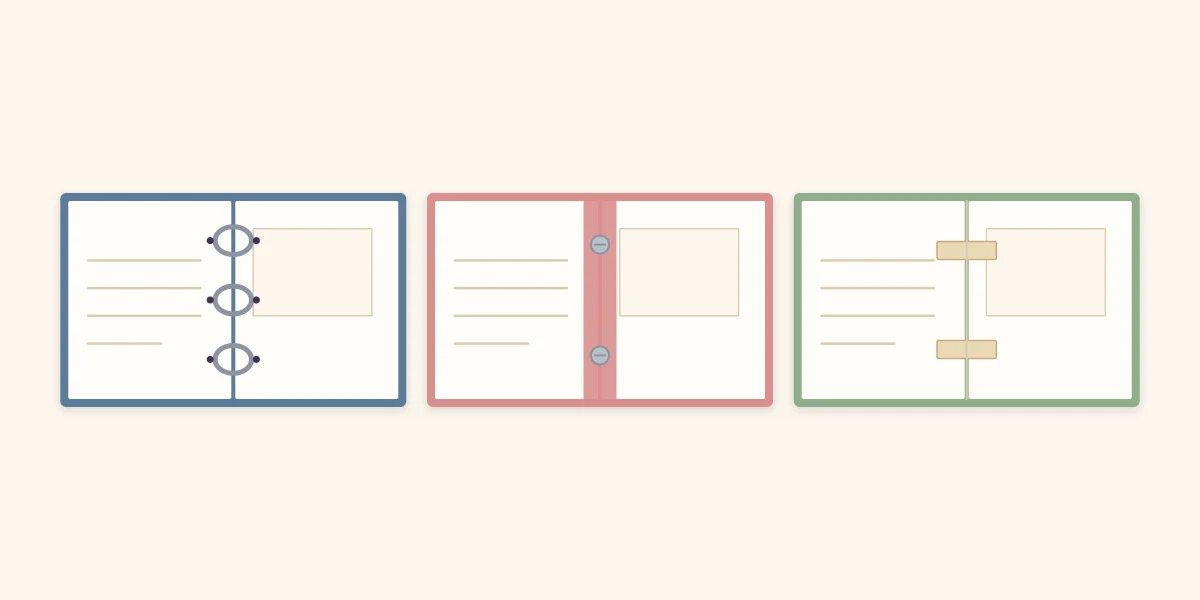
The binding is the mechanism that holds pages in the album. It determines how flat the album opens, how easily pages can be rearranged and how many pages it can take.
Three-ring
A three-ring album works like an office binder. Page protectors have three holes along one edge and snap onto rings that open by hand. Adding a page or moving one from the back to the front is a matter of opening the rings, which makes this the most forgiving binding for a first album. The trade-off is a visible gap at the center where the rings sit, so facing pages are a little apart.
Post-bound
A post-bound album holds its protectors on two or three screw posts hidden inside the spine. Pages sit close together at the center, which suits designs that run across two pages. Capacity can be increased by adding extension posts. Rearranging takes more effort, because the posts must be unscrewed and every page above the one you want lifted off.
Strap-hinge
A strap-hinge album threads flat, flexible straps through loops on the edge of each page. The pages lie very flat and meet tightly at the center. Adding pages means unthreading and rethreading the straps, and the pages and protectors are usually specific to that album style, so refills must match.
| Binding | Adding or moving pages | Gap between facing pages | Best suited to |
|---|---|---|---|
| Three-ring | Easiest; open the rings | Widest | Beginners, albums that keep growing, bulky pages |
| Post-bound | Moderate; unscrew the posts | Narrow | Finished projects, two-page designs |
| Strap-hinge | Slowest; rethread the straps | Narrowest | Albums planned in order, pages that should lie flat |
Common page sizes
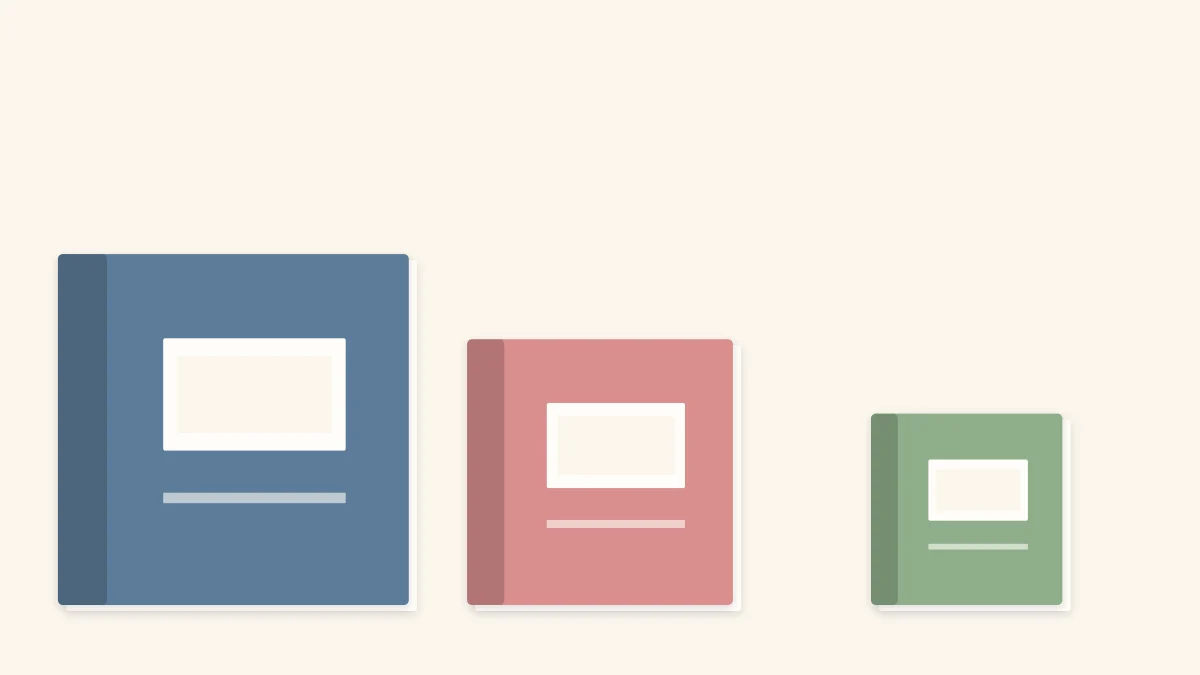
Album sizes are named by the page they hold. Larger pages take more photos and more paper; smaller pages fill quickly and suit short stories.
- 12 x 12 in (30.5 x 30.5 cm). The standard size. Most cardstock and patterned paper is sold in this size, so a sheet becomes a page base with no cutting. It holds several 4 x 6 in (10 x 15 cm) prints with room for a title and journaling.
- 8.5 x 11 in (21.6 x 27.9 cm). Matches standard letter paper, which is convenient if you print journaling or include documents. The page is taller than it is wide, so layouts tend to stack vertically.
- 8 x 8 in (20.3 x 20.3 cm). A compact square that suits one or two photos per page. Good for gift albums and single events.
- 6 x 8 in (15.2 x 20.3 cm). A small format where one 4 x 6 in print nearly fills the page. Pages come together fast, but there is little room for layering.
If you want flexibility and the widest choice of paper, choose 12 x 12 in. If large blank pages feel intimidating, a smaller size gives a finished look with one photo and a line of writing. For help turning a blank base in either size into a page, see how to start your first album.

Page protectors
A page protector is the clear sleeve that covers a finished page. It keeps fingerprints and dust off the layout and stops embellishments on facing pages from catching on each other.
- Top-loading protectors open at the top edge, so pages slide in and stay put when the album stands on a shelf. This is the most common style.
- Side-loading protectors open at the binding edge. Pages are slightly easier to slip in and out but can only be reached with the album open.
- Pocket page protectors are divided into several smaller pockets for photos and cards with no base page at all. They are useful for tickets, maps and other flat keepsakes, as described in the ideas for travel scrapbook pages.
Check the package for wording that the protectors are free of PVC and labeled acid-free, since the sleeve rests directly against your page. Buy refills that match both the page size and the binding: hole positions differ between ring, post and strap albums.
Capacity and thickness
Pages with foam adhesive, buttons or layered paper are thicker than flat ones, and an album fills faster than the page count on the label suggests. An overfilled album fans open at the front edge and puts pressure on the pages nearest the spine.
Ring albums cope best with bulk, because the rings leave space between pages. Post-bound albums need longer posts as they fill. If you like dimensional pages, leave an album visibly less than full and start a second volume.
Tip
Store albums upright like books rather than stacked flat. Standing them up keeps the weight of other albums off raised embellishments.
Matching the album to the project
Think about how the album will be built and used.
- An ongoing family album with pages added out of order suits a three-ring binding.
- A single event planned from first page to last suits post-bound or strap-hinge, where facing pages sit close. That closeness matters for two-page scrapbook layouts that share a band of paper or a photo across the center.
- A small gift suits an 8 x 8 in or 6 x 8 in album, or a handmade mini scrapbook album folded from a single sheet.
Check before you buy
- Confirm the page size on the label, not just the outer cover size, which is always larger.
- Check which protectors are included and whether refills are sold separately.
- Open the album and see how flat it lies and how wide the center gap is.
- Look at how the spine expands and whether extension posts or larger rings are available.
Watch out
Do not mix page sizes within one project. A page cut for one album cannot be enlarged to fit another, and trimming it down usually cuts into the design.
Frequently asked questions
What size scrapbook album is best for a beginner?
A 12 x 12 in album is the most flexible choice because most cardstock and patterned paper is sold in that size and needs no cutting to become a page. If a large blank page feels like too much to fill, an 8 x 8 in album works well with one or two photos per page.
Which album binding makes it easiest to rearrange pages?
A three-ring binding. The rings open by hand, so a page can be added, removed or moved without disturbing the others. Post-bound and strap-hinge albums hold facing pages closer together but must be partly taken apart to change the page order.
Can page protectors from one album be used in another?
Only if both the page size and the binding match. Hole positions and edge fittings differ between ring, post and strap albums, so check the refill package against the album before buying.